Case study · Martocci Mayhem
AI Paper Trader
A practice-first trading workspace for U.S. stocks, ETFs and crypto: research, strategy review, order previews, approval gates, risk controls and audit logs, all on paper.
- Role
- Systems Architect / Developer
- Years
- 2025 — now
- Status
- Live
The problem
Traders need to rehearse decisions and automated strategies, and to see exactly what is saved, live or blocked, before any real money is involved.
What it does
- Three automation modes: off (research only), paper, and live, which is locked.
- Evaluation rounds preview orders by default and submit at most one per round; the background scheduler runs only after an operator arms it.
- A strategy runner, broker reconciliation and a permanent order ledger.
- An AI decision advisor and operator chat, kept behind deterministic risk checks.
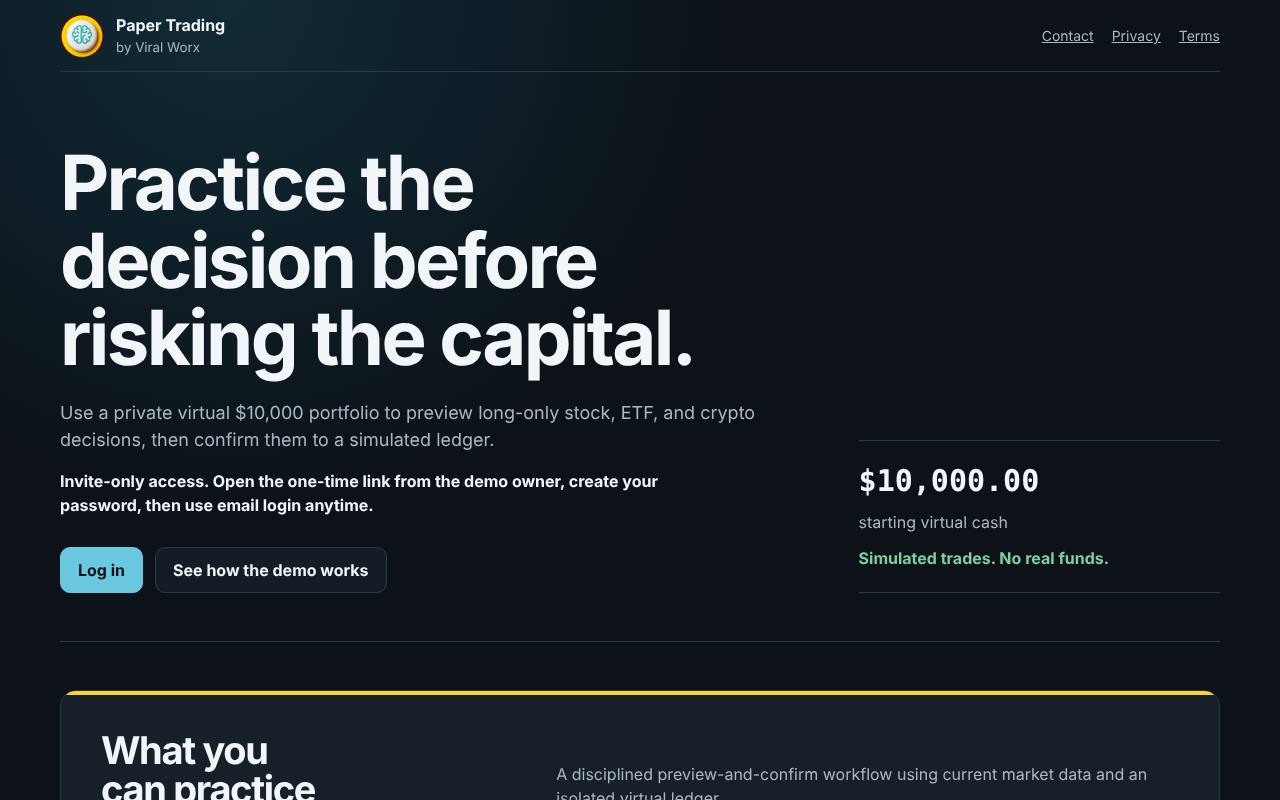
- A public practice demo with a virtual $10,000 portfolio and an alias-only leaderboard.
How it's built
- An npm workspace: Next.js web app, an execution service, a strategy-runner service and shared broker adapters.
- PostgreSQL through Prisma on Google Cloud (Cloud Run, Cloud Tasks, Cloud Scheduler, Secret Manager).
- The Alpaca paper-trading API, with a live crypto stream and a REST fallback; Gemini for the AI advisor.
Engineering decisions
- Live trading needs two separate server-level switches, and server policy always overrides the saved mode.
- Stale or missing quotes block new positions, while protective exits still go through; AI recommendations go stale when newer research exists.
- Low-confidence output, confidence drift and any step toward live trading queue an approval card for a human.
- Every decision is stored, blocked or not, with a provenance record of which prompt and model produced it.
- Restarts restore only safe scheduler state and never replay in-flight work; a cost watchdog throttles non-critical scans.
- Emergency-stop and rollback drills are rehearsed against a test harness.